Agricultural Drain Cleaning Services for Rochester Farms
Cover crop roots are quietly clogging tile drain lines across southeast Minnesota farms right now. If you have not inspected your subsurface drainage system recently, a saturated field and lost yield could be closer than you think.
Rochester Drain Rite works directly with agricultural operations in the Rochester area to protect the tile drainage systems that keep fields productive. This post breaks down why proactive maintenance matters, what is happening underground, and what you can do about it before the next growing season.
The Hidden Cost of a Saturated Field
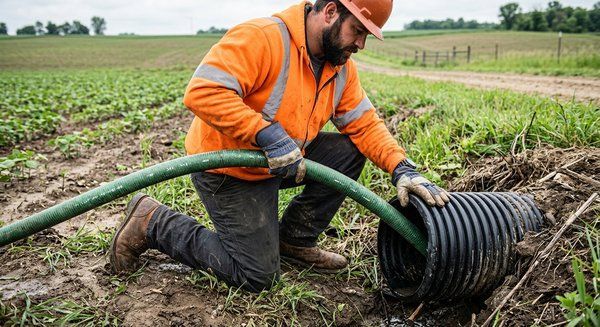
Subsurface tile drainage is the backbone of productive farming in southeast Minnesota. Without it, heavy spring rains and summer downpours turn fields into standing water, compacting soil and delaying planting windows. When tile lines fail, the damage is not just wet soil. It is lost planting days, reduced yields, and in some cases, accelerated soil erosion along field edges.
The frustrating reality is that many failures are entirely preventable. The blockages build slowly. By the time water is visibly pooling in a field, the clog has usually been forming for a full growing season or longer.
How Cover Crops Become a Drain Tile Problem
Cover crops are widely promoted across Minnesota for good reason. Cereal rye, daikon radishes, and similar varieties reduce erosion, improve soil structure, and filter runoff. State and federal conservation programs actively encourage their use.
Here is the problem. Deep-rooted cover crops are aggressively searching for moisture. Tile drain lines are consistently moist. Roots find their way into joints, hairline cracks, and open ends, then grow inward. Once inside, they do not just slow drainage. They act like a net, trapping sediment and debris until the line is nearly or completely blocked.
This is not a niche issue. It is an ongoing, widely discussed challenge among Minnesota farmers who have adopted modern soil health practices. Balancing cover crop benefits with tile system health requires active management, not assumptions.
Why Old Maps Are Unreliable
Many farms in the Rochester region have tile systems installed decades ago. In some cases, the original drainage maps have been lost, passed between property owners without documentation, or were never drawn accurately in the first place.
This creates a significant hurdle. You cannot maintain a system you cannot find. Attempting to jet or clean a tile line without knowing its path risks missing the blockage entirely or, worse, damaging an adjacent line.
In 2026, professional locating services have become an essential first step for farms with aging or undocumented drainage infrastructure. Locating buried tile lines before any cleaning work begins saves time, reduces risk, and gives farm operators an accurate map they can actually rely on going forward.
What Drain Jetting Actually Does (and Why It Matters)
Chemical treatments are not a viable option for tile drain systems. The lines are buried, fragile, and often made from older clay or corrugated plastic. Harsh solutions can degrade materials and do nothing to address root intrusion anyway.
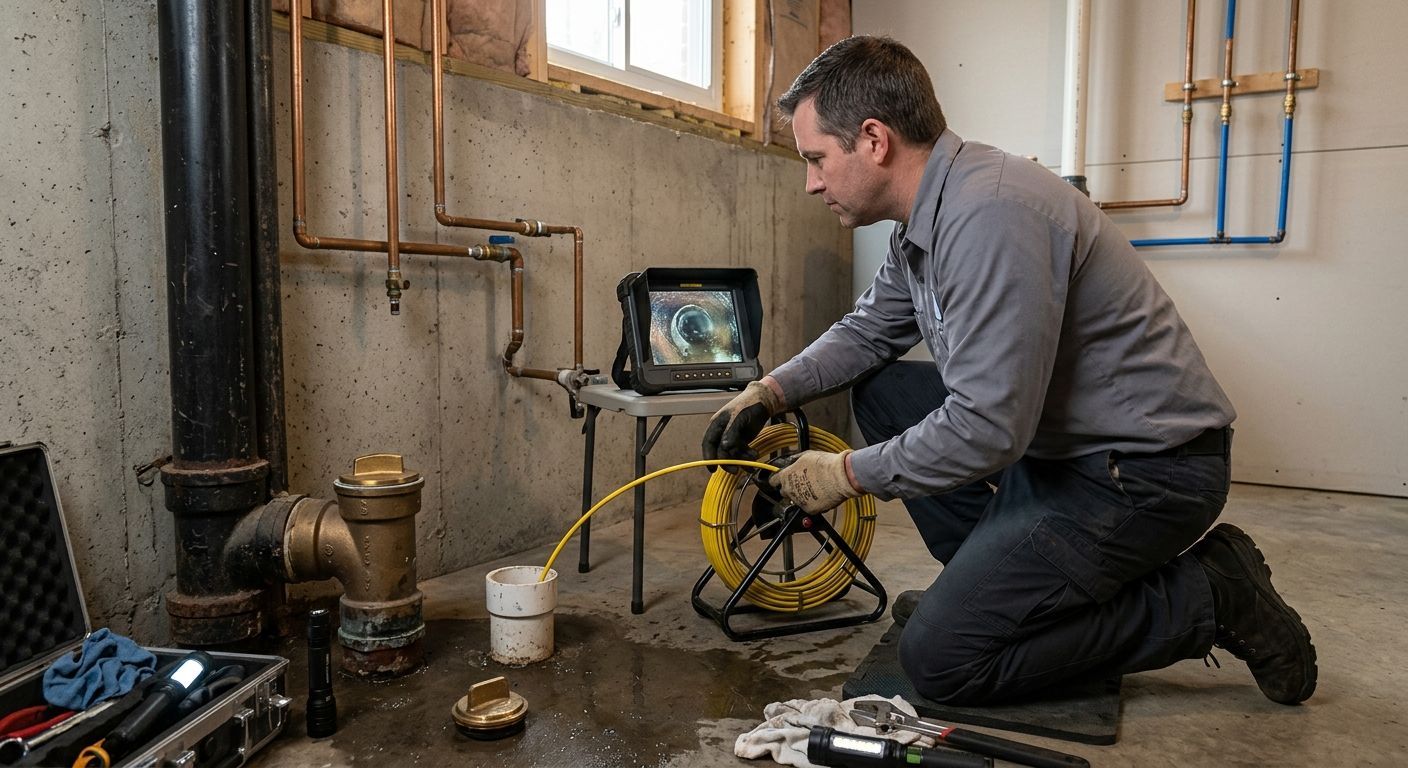
High-pressure drain jetting is the current professional standard for agricultural tile cleaning.
Here is why it works:
- Pressurized water streams reach well beyond 4,000 PSI, physically cutting and flushing root masses out of the line
- Multi-directional nozzles clean the full interior wall of the pipe, not just the center channel
- No chemicals are introduced into the soil or drainage water
- Fragile clay and plastic tile lines are not damaged when the process is performed correctly by trained technicians
- Flushed debris is expelled rather than compacted further into the line
The result is a tile line that drains the way it was designed to. Not partially, not sluggishly, but fully and efficiently.
Signs Your Tile System Needs Attention
Not every failing tile line announces itself with a visibly flooded field.
Watch for these early warning signs:
- Slower-than-normal drainage after rain events that used to clear quickly
- Isolated wet patches or soft spots in fields that were previously well-drained
- Visible soil erosion near tile outlet locations
- Outlet pipes with reduced or no visible discharge during or after rain
- Fields where cover crops are noticeably more vigorous in specific rows (indicating roots are feeding from moisture in the tile)
Catching these signs early means addressing a partial blockage, not a collapsed or fully obstructed line.
Preventative Maintenance vs. Emergency Replacement
Emergency tile replacement is expensive. It involves excavation, materials, labor, and significant disruption to field operations. It also cannot always happen at a convenient time. A line that fails in late spring, right before planting, creates a serious operational problem with no quick fix.
Preventative agricultural drain cleaning services cost a fraction of replacement. Scheduled jetting and periodic locating work allow farm operators to identify and clear developing blockages before they become structural failures. This shift from reactive tile replacement to predictive tile maintenance is what agricultural operations across southeast Minnesota are moving toward in 2026.
Rochester Drain Rite helps make that transition practical. With professional locating, drain jetting, and agricultural drain cleaning expertise, the team gives local farm operators the tools to stay ahead of subsurface drainage problems rather than scrambling to solve them mid-season.
Frequently Asked Questions
How often should agricultural tile lines be cleaned?
There is no single answer, but most actively farmed fields with cover crop programs benefit from inspection every two to three years. Lines with a history of root intrusion may need annual attention.
Can jetting damage older clay tile lines?
When performed by experienced technicians using appropriate pressure settings and nozzle types, hydro-jetting is safe for both clay and plastic tile. Improper DIY attempts carry much higher risk of damage.
What if I do not know where my tile lines are located?
Professional locating services use specialized equipment to trace buried lines accurately. This is always recommended before any cleaning or jetting work begins on an undocumented system.
Does drain jetting remove all root material?
High-pressure jetting effectively cuts and flushes root masses from inside tile lines. Severely damaged sections with significant root infiltration may require follow-up inspection to confirm full clearance.
Is agricultural drain cleaning available during busy planting seasons?
Scheduling early, before peak spring demand, is always advisable. Off-season maintenance keeps your system ready when it matters most and avoids conflicts with planting timelines.
Protecting your tile drainage system does not have to be reactive or costly. Contact Rochester Drain Rite today to schedule a professional agricultural drain cleaning consultation and keep your fields draining when southeast Minnesota's weather demands it most.